
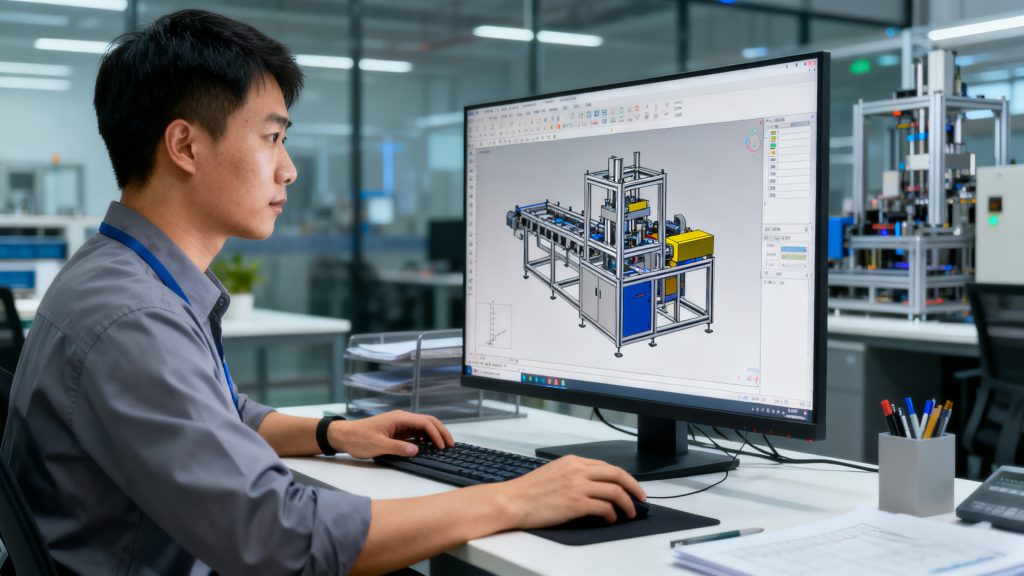
Main Tasks in “Non-Standard Automation” Design Work
1.Information Collection: Gather detailed information on all specific aspects of the existing processes, production techniques, or equipment, including current capacity, manpower, number of process steps, process quality (or product quality), raw and auxiliary materials, etc. It is advisable to conduct multi-level inquiries, inspections, and observations on the production line with supervisory engineers and operational staff, while also understanding environmental requirements and any special conditions in the workplace.
2.Requirement Analysis: Consult with the client’s management to understand the primary objectives and requirements to be achieved.
3.Solution Confirmation: Based on the above information and available options, develop a preliminary feasible solution. This solution is discussed within the team and then submitted to the client for confirmation. (Typically, several iterations are required before initial approval).
4.Key Component Selection: After the client confirms the feasibility of the solution, proceed with the selection of automation components. (Preliminary selection is often initiated during the feasibility study phase).
5.Parameter Verification: Design the entire process workflow according to the client’s capacity requirements (usually referring to the cycle time), and verify and confirm the functionality of the initially selected automation components.
6.Routine Design: Upon completion of the above tasks, proceed with the preliminary design of the assembly layout, following standard mechanical design workflows. Concurrently, electrical engineers and software programmers design electrical schematics and develop control software based on the overall implementation plan and workflow diagrams.

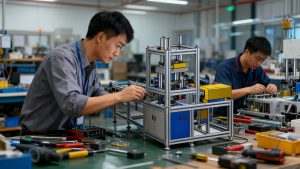
7.Review and Client Confirmation: After completing the mechanical design, procuring external automation components and machined parts, and finalizing electrical and control diagrams, conduct a formal review and obtain client confirmation before proceeding to manufacturing, assembly, and debugging. Upon completion, move to the trial operation phase.
8.On-Site Debugging: Through trial operation and testing, once the design requirements and client specifications are met, proceed to on-site installation and debugging at the client’s facility until the entire project is finalized.
Adjustments: The above eight main tasks may require appropriate adjustments depending on the specific project circumstances. Each task must be executed strictly in accordance with established work standards to avoid significant errors.